
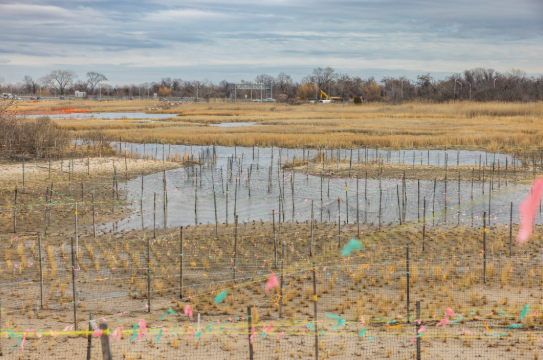
City agencies on Thursday said they completed a $7 million project that restored nearly three acres of wetland in Four Sparrow Marsh in Mill Basin, helping to improve the health of Jamaica Bay.
The NYC Department of Environmental Protection (DEP), NYC Parks, and the NYC Department of Design and Construction (DDC) said the restoration project removed over 9,000 tons of non-hazardous soil, while clean sand and loamy soil were fine-graded to fill the wetland.
The tidal, transition and upland areas were then planted using salvaged native marsh hummoks, as well as new native plants and seeds. Additionally, 50 trees, 255 shrubs, and nearly 40,000 herbaceous plant plugs and quarts were planted, including Spartina alterniflora, Prunus maritima, Myrica pennsylvanica, Spartina patens, Distichlis spicata and other species.
“Jamaica Bay is one of New York City’s most important natural areas, and restoring wetlands like Four Sparrow Marsh is key to protecting the health of the entire ecosystem,” DEP Commissioner Rohit T. Aggarwala said in a statement. “These efforts strengthen the bay’s resilience, protect wildlife, support biodiversity and ensure that the Mill Basin community can enjoy the environmental and recreational benefits of this unique landscape.”
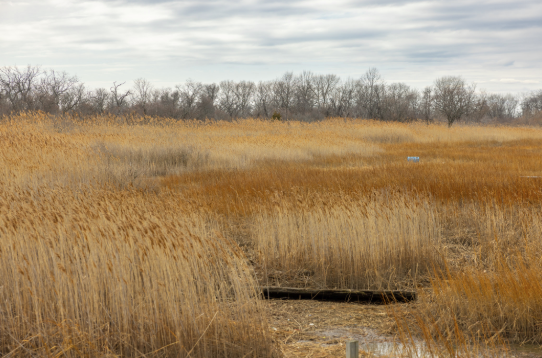
A section of the project area is Four Sparrow Marsh Park, one of three nature preserves on the southern tip of Brooklyn that are home to undisturbed wildlife. The park's distance from residential areas allowed its natural habitat to flourish and is home to many birds, including bobolinks, snipe and little blue herons. Four Sparrow Marsh also contains a diversity of plant-life in its mudflats, marshes and meadows.
“Our salt marshes are critical ecosystems that do so much for our city—from protecting our coastline in the face of extreme weather, to offering vital habitats for non-human New Yorkers like salt marsh sparrows and diamondback terrapins,” said NYC Parks Commissioner Iris Rodriguez-Rosa.


