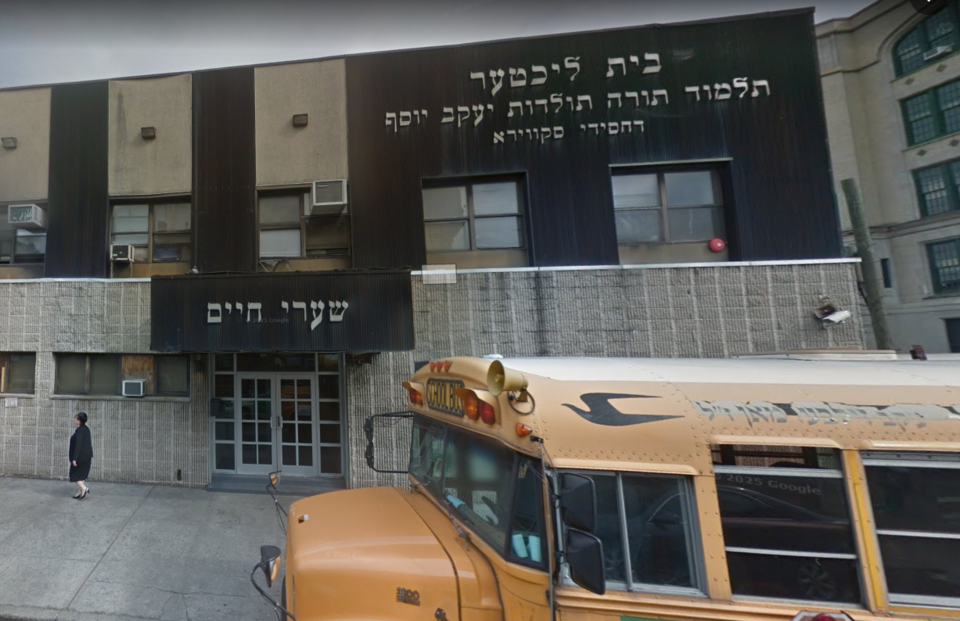
A state judge in July ruled that three Brooklyn yeshivas could still meet state education requirements, and therefore qualify for funding tied to secular instruction.
Earlier this year, six yeshivas in the borough lost their status as schools, and therefore state funding, for failing to adhere to the Substantial Equivalency Regulations, which requires students who attend non-public schools get secular education.
However, on July 15, Albany Supreme Court Judge Denise Hartman gave three yeshivas a Temporary Restraining Order (TRO) after a lawsuit argued that the New York State Department of Education was not allowing the yeshivas to use a new statutory system to prove their compliance.
Yeshiva Mosdos Chasidei Square Boro Park, Yeshiva Mosdos Chasidei Square of Williamsburg, and Yeshiva Torah V’Yirah Bais Rochel, were among the six this year that received final negative determinations and faced losing funds for not complying with state education laws, marking what has been an eventful year in the ongoing struggle between Orthodox Jewish education and the state Education Department.
A turning point in this struggle came this past spring when the state's budget legislation passed. The legislation amended the New York State Education Law, enabling nonpublic schools to satisfy the substantial equivalency requirement through annual tests.
Steven Barshov, the attorney representing the three yeshivas, said the state education department violated the law by refusing to allow the yeshivas to use the new statutory testing system.
"What is sought is a ruling that the NYS Education Department violated the law by refusing to allow the Yeshivas to use the new statutory system," he told BK Reader. "When I commenced that lawsuit, I also sought a preliminary injunction and temporary restraining order preventing the New York State Dept of Education from implementing the Negative Determinations issued to the yeshivas. The purpose for requesting that relief was to prevent funding from being lost and programs terminated while the court is deciding the litigation, especially programs for children with special needs."
The court issued the temporary restraining order and, in order to do so, was required to find that the yeshivas were likely to prevail in the litigation, he said.
A preliminary injunction and a TRO tend to go hand-in-hand. The preliminary injunction prevents the defendant from taking any action that could harm the plaintiffs in the case. A TRO is granted when a hearing for a preliminary injunction is pending, and also to prevent any harm to the plaintiff's case.
When asked why the other three yeshivas did not get a TRO, Barshov said as far as he knew, the other three yeshivas did not file a lawsuit.
The announcement of the TRO was met with dismay by those who want to see secular education enforced at yeshivas.
"These schools have refused to cooperate with New York City or the State for almost a decade," said JP O'Hare, a spokesman for the New York State Education Department. "They have expressed no intention of providing an instructional program that offers basic education in English language arts, math, science or social studies. This lawsuit, fueled by the 2025 budget amendments, will reward these bad faith actors, allowing them to collect federal and state money without any oversight."
Young Advocates for Fair Education (YAFFED) is an organization that has been calling for secular education in yeshivas for 10 years. Executive Director Adina Mermelstein Konikoff also condemned the judge's decision.
"These schools collectively serve eighteen hundred students, and not only failed to provide education that meets century-old standards," she said in a statement. "They refused to engage with regulators tasked with ensuring children receive the education they are entitled to. NYSED’s actions were a last resort after having exhausted all other efforts over the course of years, and are necessary to guarantee the right of children to a sound, basic education."
After all of the written arguments are submitted to the court around Aug. 8, the judge will then decide whether the yeshivas can utilize the new testing method or not, Barshov said.
*Editor's Note: This article was updated on Aug. 4 to clarify the parameters of the lawsuit.