

“It’s time to finally close Rikers Island,” New York City Mayor Zohran Mamdani said on Nov. 20. His Administration released a comprehensive plan to close the complex — the country’s second largest jail system — by 2032.
Rikers is one of the most violent jail systems in the country, as inmates have accused guards of excessive force, sexual assault and more. Since 2022, more than 50 people have died in the custody of the Department of Correction, almost all of which were at Rikers.
New York City Public Advocate Jumaane D. Williams described the East River island as a “moral blight” on New York City.

“The era of a justice system that is ‘out of sight, out of mind’ is coming to a long-overdue end,” said Stanley Richards, NYC Correction commissioner and the first former incarcerated person to hold his position. “The plan is a roadmap toward a safer city that lifts up the dignity of the people who live and work in our jails.”
The Plan: Beginning in Brooklyn
The plan calls for four borough-based jails to phase out the capacity at Rikers, starting with the Brooklyn facility completion set for 2029.
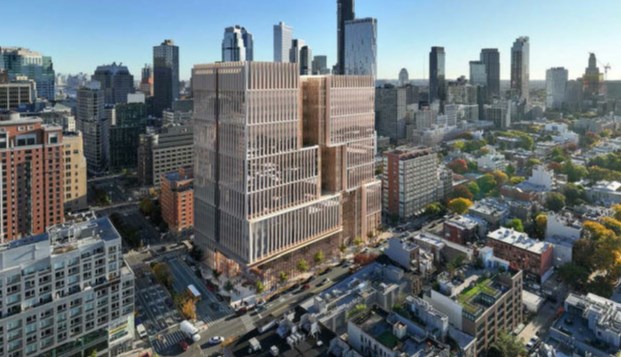
The Brooklyn site is already nearing its finished look at 275 Atlantic Ave., and is set to hold 1,040 beds and host 30,000 square feet of community space on the ground level.
All jails would be closer to public transportation, courts and communities where incarcerated people live, according to the Office of the Mayor. The relocation aims to make it easier for people to maintain relationships with family, access legal counsel and receive support.
Brooklyn Borough President Antonio Reynoso said he looks forward to working with the Mayor on the plan “to ensure [Brooklyn’s] local infrastructure, from our healthcare institutions to our CBOs, is supported throughout the implementation of [the] plan.”
The plan also outlines the creation of 236 Outposted Therapeutic Housing Units in Brooklyn and the Bronx to transfer incarcerated people with mental health issues to therapeutic beds, an investment into a dedicated facility for women, restoration of the city’s online bail payment portal, which has been unavailable since 2023, a phased transition of staff off of Rikers and a renewable energy plan for the island.
Delays After Initial Approval
The plan to close Rikers by 2027 was approved by New York City council in 2019. This past summer, the Mamdani Administration acknowledged that it would not make that deadline.

As of 2025, the population on Rikers had risen to more than 7,000, a number which could jeopardize the island’s closure, reported The City.
Mamdani said that the new plan provides for 4,500 beds across facilities.
When asked during a press conference about the approximate 6,000 on Rikers and where any overflow will go, Mamdani referenced the tens of millions of dollars that will be used to ensure that less New Yorkers do not land in custody, but did not say what would happen to a potential overpopulation directly.
Demand for Benchmarks
While many advocates welcome the city’s commitment to closing Rikers, skepticism remains after an initial plan that was delayed.
“The pandemic alone cannot explain years of lost progress,” The Legal Aid Society said in a statement. “The city’s commitment must be backed by enforceable benchmarks, meaningful investments in community-based alternatives and support services, fully funded public defenders and accountability for conditions to confinement.
“Without these measures, the promise to close Rikers will remain unfulfilled.”
Next Steps: New York City Council
The new plan still requires approval from New York City Council.
At least nine council members expressed support for the plan in the administration’s press release, including Brooklyn-representing members Yusef Salaam, Lincoln Restler, Alexa Avilés, Chi Ossé and Jennifer Gutiérrez and Shahana Hanif.
“Delays under previous administrations have made it clear that more time is needed to fulfill the commitment the City Council made to New Yorkers in 2019,” said Council Speaker Julie Menin.


