
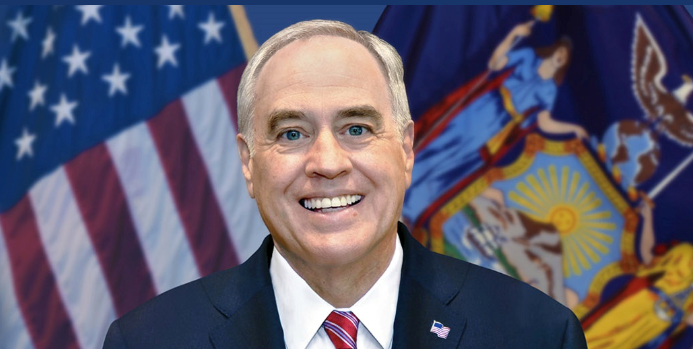
New York left about $36 million in state funding intended to address teacher shortages unawarded between July 2019 and August 2025, while many eligible school districts were unaware of grants available to support teacher recruitment and retention, according to a state audit.
New York State Comptroller Thomas P. DiNapoli’s audit found that the State Education Department awarded $155 million of the $191 million allocated for four major teacher shortage grant programs during the period. About $118.9 million, or 62% of the total allocation, was spent.
The findings come as New York is expected to need about 180,000 new teachers over the next decade. School districts across the state are already reporting shortages in high-need areas, including science, special education and career and technical education, which could contribute to larger class sizes and make it harder to meet students’ needs.
“The State Education Department needs to more effectively use the funds available to help address New York’s shortage of teachers and improve program outcomes,” said DiNapoli. “The Department must strengthen its oversight, communication and monitoring, and increase the use of the programs that support teacher recruitment, retention, certification and workforce diversity.”
Limited participation contributed to the unused funding, according to the audit. During the 2022-26 Teachers of Tomorrow grant cycle, only 27 of 609 eligible school districts, or 4%, applied for funding.
Auditors surveyed 692 school districts outside New York City and received responses from 244. Among respondents, 86% said they had not participated in the grant programs reviewed. Of 210 nonparticipating districts, 190 said they were unaware of the programs, while 164 said they wanted more information.
The audit also found that rural districts faced recruitment challenges tied to lower salaries and limited housing but were often unaware of grants that could support their efforts.
Auditors recommended that the State Education Department improve oversight, increase outreach to school districts, track spending and participation more effectively and establish performance measures to assess the programs.
The department generally disagreed with the findings, citing COVID-19, staffing shortages, statutory limitations and procurement requirements. It agreed to strengthen performance metrics, expand outreach and formalize monitoring procedures.


