
On a cool October day nearly 14 years ago, a furious wind set upon Brooklyn, ripping trees from the ground and whipping powerlines across asphalt with ease. A few hours later, as night descended and families huddled together under candlelight and blankets, water surged to the height of SUVs and threw them into local storefronts. The next day, as the ocean’s fury subsided, Brooklyn woke to find its parks ravaged, its community centers flooded, and its most vulnerable populations devastated.
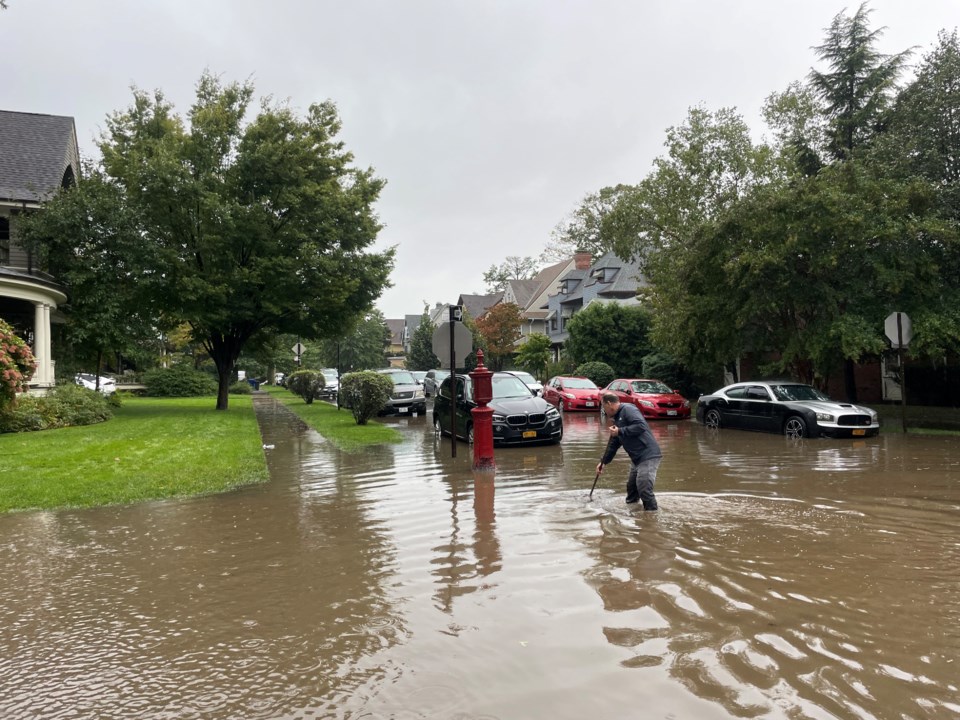
The cataclysmic conditions brought about by Hurricane Sandy served as a stark warning for New York. Growing up here, the most inclement weather I thought I’d ever deal with was snow that piles up so high you can’t open your front door- the kind that compacts heavier than concrete when you spend the morning watching TV instead of shoveling out a blizzard’s snow-day gift. As the years go by, those snow days are becoming rarer and rarer, while sweltering summer days and torrential downpours come by much more often. Soon, Sandy-like, 100-year floods will happen more frequently in New York. Gone are snow days- New York is entering the era of flood days. Unlike snow, Brooklyn isn’t prepared for these floods, and the people who’ll be most affected by them are the communities historically marred by redlining and administrative apathy.
Sandy revealed just how unprepared Brooklyn was for catastrophic flood events- especially in its southern neighborhoods like Coney Island, Brighton Beach and Red Hook. During Sandy, NYCHA housing complexes in Red Hook were decimated by floods: businesses closed, electrical systems were fried, and boilers were drowned. For weeks after the flood, the people of Red Hook were isolated in their homes without power or heat. Even after heat returned through faulty boilers, creeping catastrophes festered in the homes of these Brooklynites in the years following.
The moist environment left behind by floods sets the stage for rodents, mosquitoes, and other insects to explode in number- bringing with them disease, infestation. The moisture left behind in aging woods can lead to systemic, hidden mold growth that can irritate the lungs of Brooklyn’s already disproportionately-asthmatic population. As floods become more frequent and powerful over time, residential communities in southern neighborhoods could suffer from worsened asthma, new respiratory illnesses, and exposure to industrial waste deposited by flood waters. The cost of addressing these issues once they’ve set in is high, and these communities won’t have the resources needed to fix them.
Today, 60% of properties in southern Brooklyn have a risk of flooding. This risk will only worsen with climate change. Within the next 30 years, Brooklyn’s sea level is expected to rise by over a foot and a half, and high-tide days are expected to occur eight times as frequently as they do now- at nearly 80 per year. Soon, Brooklyn’s summers will be defined by constant mold, moisture, and mosquitoes. These issues alone will cost the city millions, and will cost these communities their health, futures, homes. Inaction at this juncture threatens to erase both familial homes and future prospects: the outright erasure of southern Brooklyn’s past and future- an existential threat.
After Sandy, NYC invested in projects to protect the shorelines of communities in Red Hook, lower Manhattan, and some affluent Brooklyn neighborhoods. The latter two are undergoing 18-foot flood barrier construction that will protect them from the devastating floods expected in coming years. Conversely, the 10-foot flood barriers being erected for Red Hook and other southern Brooklyn neighborhoods fall short of flood predictions, and won’t be enough to protect against them.
NYC must reevaluate its flood protection measures for Red Hook and other Brooklyn communities. They must erect protections equal to those of Lower Manhattan and other affluent areas to protect our most vulnerable populations from disease and financial ruin. An investment in higher floodwalls today will mitigate the devastation that climate change is set to enact on Brooklyn. Refusal to build proper protective infrastructure is a disturbing continuation of the historic systematic, purposeful dehumanization of redlined communities in Brooklyn. To protect our neighborhoods, people, and futures from climate change, we must fight for stronger flood protections as we enter a future devoid of snow days.
Pranav Chopra is a Master of Public Health student at SUNY Downstate Health Sciences University.


