
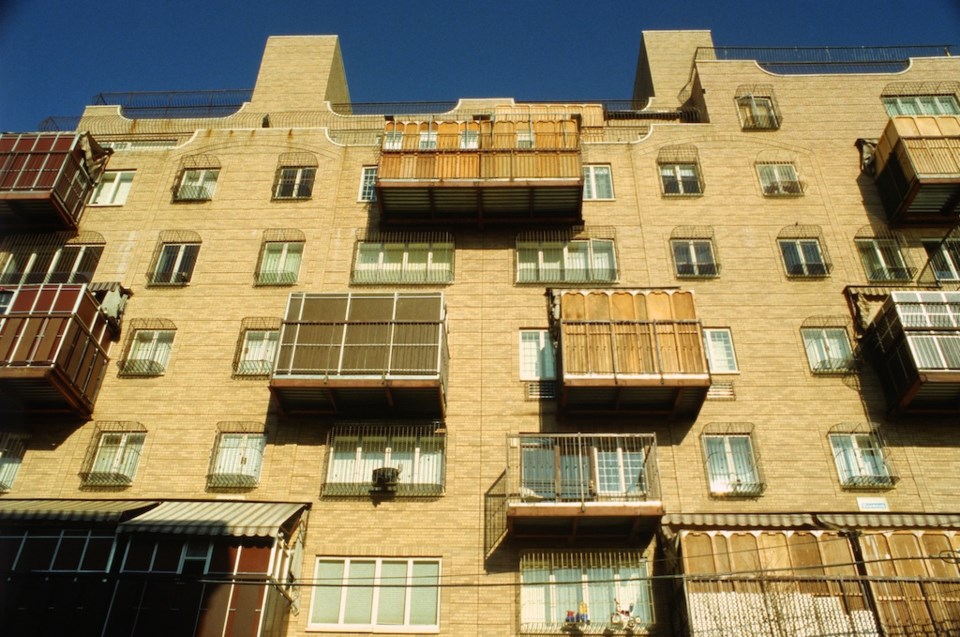
If you live in Crown Heights, Borough Park or Williamsburg and you are not Jewish, you probably have wondered about the wooden, shack-like structures that are erected around the same time every year on the patios of apartment dwellings.
What are they?
The huts called sukkah are a large part of the celebration of Sukkot, the Hebrew word for "Feast of Booths," one of the three Jewish pilgrimage and harvest holidays of celebration and thanksgiving.
Sukkot this year begins on the evening of Monday, Oct. 6, and ends on the evening of Monday, Oct. 13. Every year, Sukkot falls on a full moon.
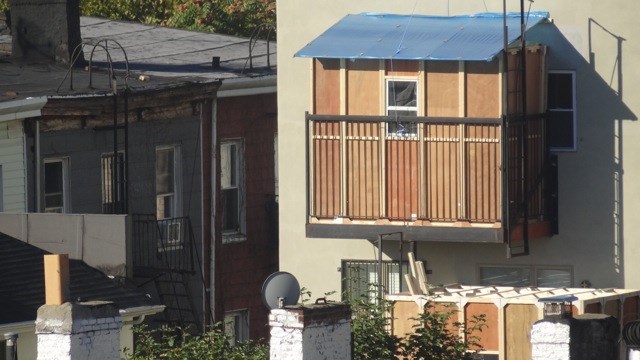
Sukkot is celebrated, first of all, by building a sukkah. As a temporary dwelling, the sukkah also represents the fact that all existence is fragile, and therefore Sukkot is a time to appreciate the shelter and the protection of the home and the body.
Sukkot is also the plural Hebrew word for sukkah, which is the hut-like structure that the Jewish people lived in during the 40 years of travel through the wilderness after the exodus from Egypt.
Rabbi Yaacov Behrman, a member of the Chabad community of Crown Heights, said a medium-sized sukkah takes about four to fiave hours to build, but that sometimes the parts are pre-fabricated for easy assembly.
"When I did a safari in Kenya, I took one of these things called a 'pop-up sukkah' that you can use for travel; it's like blowing up a balloon, and it's ready. And then you have some of the older people who build it from scratch," Behrman said. "Also, young community members offer their services to come build your sukkah for a fee."

Many Jewish families will eat all of their meals in the sukkah for seven days and some even sleep in the sukkah, when the weather is nice, for the duration of the holiday as a fun tradition. The sukkah is typically decorated with kids' art, colorful construction-paper garlands, flowers and candles.
For observant Jewish people in New York, the first day of the week-long holiday is considered a holy day in which most forms of work and the use of electricity are forbidden.
Also, the tops of the Sukkot cannot be covered by plastic or any synthetic materials while they are in use.
"We do 'schach,' which is covering it with bamboo or palm trees," Behrman said. "But it has to be a natural material. One of the requirements of the sukkot is that you should see the sky. So, there cannot be a covering, because you have to be able to look at the stars. Chabad is very strict to Sukkot, so even when it's pouring rain, we sit in the sukkot and you get caught in the rain."
However, when the weather is nice and the company is good, it's actually fun to be outdoors, Nehrman said.
"You have candles, it's romantic. Some really put in very nice decorations," he added.
Another significant tradition is the Waving the Four Species—the Etrog, Lulav,
To wish someone a Happy Sukkot, say 'hag sameach!' which is Hebrew for 'happy holidays!'
*This article was originally published on Sept. 28, 2023.


