
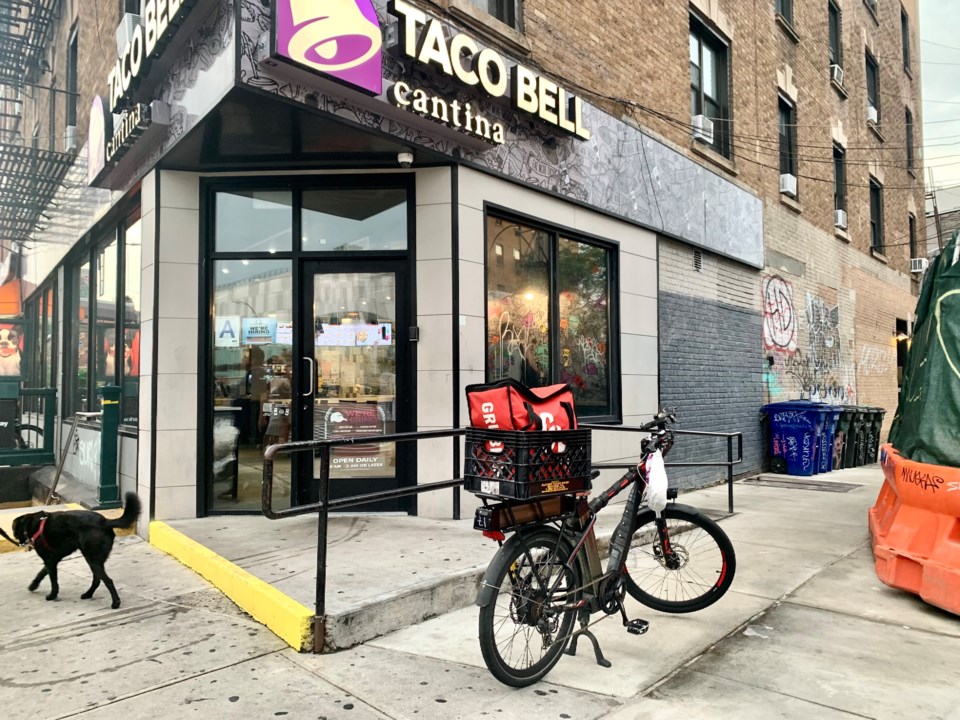
A new report from New York City Comptroller Brad Lander warns that the rapid growth of e-commerce and last-mile delivery services is fueling crashes, air pollution and worker injuries, particularly in Black and brown neighborhoods.
Daily package deliveries jumped from 1.8 million before the pandemic to 2.5 million in 2024, with nearly one in three New Yorkers receiving a package every day. Lander joined elected officials, safety advocates and labor organizers to push City Hall for stronger oversight of the booming industry.
“We've become so accustomed to getting our toilet paper, socks, or butter cookies right away that we’ve stopped thinking about the consequences; but we all pay the price of more traffic crashes, worsening air quality and worker injuries,” Lander said in a statement.
The report, Fast Shipping. Slow Justice, outlines how a lack of regulation has allowed delivery facilities to open with little public review, often in communities already burdened by pollution and traffic.
Key Findings
Traffic Crashes
- After last-mile facilities opened, 78% of surrounding areas saw an increase in injury-causing crashes.
- Injuries within a half-mile radius rose by an average of 16%.
- Truck-related crashes increased by 146%, with truck-injury crashes up 137%.
- Maspeth, Queens saw sharp surges near major Amazon and FedEx warehouses, 53% and 48% increases, respectively. A cluster of facilities in East New York also showed significant crash spikes.
Air Quality & Environmental Justice
- 68% of last-mile warehouses are located in officially designated Environmental Justice Areas, including Red Hook, East New York, Maspeth and Hunts Point.
- These neighborhoods are 65.8% Black or Latine, compared to 49.2% citywide.
- Health Department data show higher air pollution in areas with dense warehouse and truck activity, such as Newtown Creek, Sunset Park and Red Hook.
Worker Safety
- Between 2022 and 2024, 76% of identified facilities reported injuries to OSHA, more than 2,000 injuries, averaging 678 per year.
- Injury rates at last-mile facilities reached 8.3 per 100 employees, more than triple the national average of 2.4.
- Amazon’s Delivery Service Partner model topped those rates, reaching 9.2 injuries per 100 employees in 2023 and 2024.
"Comptroller Lander's report makes it clearer than ever that last-mile delivery services are undermining New Yorkers' access to clean air, safe streets, and protected workplaces," said Brooklyn Borough President Antonio Reynoso. “From heavier traffic to increased pollution, families in neighborhoods like Red Hook, East New York, and Sunset Park are especially feeling the disruptive impacts of the growing e-commerce industry."
The report attributes the crisis to fragmented regulations that allow facilities to open “as-of-right” while shifting liability through subcontracting models, Lander said.
To address this, the comptroller urged the city to: pass the Delivery Protection Act (Intro 1396) to establish licensing requirements, set labor standards and hold facility operators liable; enact the Indirect Source Rule (Intro 1130) to curb truck emissions at warehouse sites; expand freight management and Clean Trucks initiatives, including Neighborhood Loading Zones, commercial cargo bikes and Smart Curbs; finalize the Last Mile Facility Text Amendment to end as-of-right development and prevent overconcentration in vulnerable neighborhoods; and create a coordinating body to oversee zoning, labor, environmental standards and industry-wide enforcement.


